
Digital Marketing: A Complete Guide for Modern Businesses
In today’s digital world, having an online presence is no longer optional for businesses. Customers use search engines, social media, websites, email, and online platforms to discover products and services before making purchasing decisions. This is where digital marketing plays an important role.
Digital marketing refers to promoting a business, product, or service through digital channels. It helps businesses reach the right audience, build brand awareness, generate leads, and increase sales. Whether you operate a small local business or a large company, an effective digital marketing strategy can help you compete and grow in a rapidly changing marketplace.
What Is Digital Marketing?
Digital marketing is the process of promoting products and services using internet-based platforms and digital technologies. Unlike traditional marketing methods such as newspapers, television, and billboards, digital marketing allows businesses to communicate with potential customers online.
Some of the most popular digital marketing methods include:
- Search Engine Optimization (SEO)
- Social Media Marketing
- Pay-Per-Click Advertising (PPC)
- Content Marketing
- Email Marketing
- Website Marketing
- Online Reputation Management
- Influencer Marketing
Each method has a different purpose, but they can work together to create a complete online marketing strategy.
Why Is Digital Marketing Important?
Consumers are spending more time online than ever before. They search for businesses on Google, compare products through websites, read online reviews, and interact with brands on social media.
Digital marketing gives businesses the opportunity to reach these customers where they already spend their time.
One of its biggest advantages is that it can be measurable. Businesses can track website visits, clicks, leads, conversions, engagement, and advertising performance. This information helps marketers understand what works and improve their campaigns.
Digital marketing can also be more flexible than traditional advertising. Businesses can adjust campaigns, target specific audiences, test different messages, and control advertising budgets based on their goals.
Search Engine Optimization
Search Engine Optimization, commonly known as SEO, is one of the most important parts of digital marketing. SEO focuses on improving a website so that it can appear higher in search engine results.
When people search for products or services related to your business, appearing prominently in search results can increase visibility and attract potential customers.
SEO generally includes:
- Keyword research
- Website optimization
- Technical SEO
- Content creation
- Link building
- Local SEO
- Website performance improvements
A strong SEO strategy does not only focus on search engines. It also aims to provide useful and relevant information to visitors.
Social Media Marketing
Social media has become an important communication channel for modern businesses. Platforms such as Facebook, Instagram, LinkedIn, and other social networks allow businesses to connect directly with their target audience.
Social media marketing can be used to:
- Increase brand awareness
- Promote products and services
- Share educational content
- Generate leads
- Communicate with customers
- Build an online community
Successful social media marketing requires consistency. Businesses should create content that is useful, engaging, and relevant to their audience instead of simply promoting products all the time.
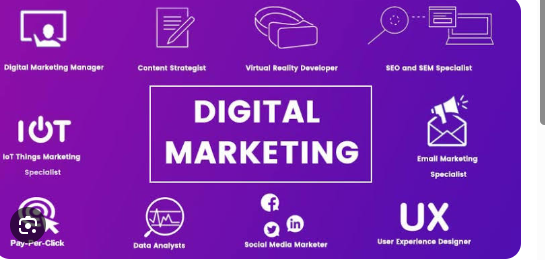
Content Marketing
Content marketing focuses on creating and distributing valuable information for a specific audience. Instead of directly pushing a product, businesses provide content that answers questions, solves problems, and educates potential customers.
Examples of content marketing include:
- Blog posts
- Videos
- Infographics
- Guides
- Case studies
- E-books
- Social media posts
High-quality content can help establish a business as an authority in its industry. It can also support SEO by providing search engines with useful information to understand and rank a website.
Pay-Per-Click Advertising
Pay-Per-Click advertising, or PPC, allows businesses to display paid advertisements on search engines and other digital platforms. Advertisers generally pay when someone clicks on their advertisement.
PPC can be useful when businesses want to generate traffic and leads quickly. Campaigns can be targeted based on factors such as keywords, location, demographics, interests, and user behavior.
However, successful PPC advertising requires careful planning. Businesses need to select relevant keywords, create compelling advertisements, optimize landing pages, and monitor campaign performance.
Email Marketing
Email marketing remains an effective way to communicate with existing and potential customers. Businesses can use email campaigns to share promotions, company updates, educational content, product information, and personalized offers.
A successful email strategy focuses on providing value rather than sending unnecessary messages. Personalization and audience segmentation can also improve engagement and help businesses deliver more relevant content.
Importance of a Professional Website
A website is often the foundation of a company’s digital presence. It provides customers with information about products, services, pricing, contact details, and the company itself.
A professional business website should be:
- Mobile-friendly
- Fast-loading
- Easy to navigate
- Secure
- Visually appealing
- Search-engine friendly
- Focused on conversions
A good website should also include clear calls to action, such as “Contact Us,” “Get a Quote,” “Book a Consultation,” or “Buy Now.”
Benefits of Digital Marketing for Businesses
A well-planned online marketing strategy can provide several benefits.
1. Wider Reach
Businesses can reach customers beyond their local area and potentially serve audiences across different cities, states, or countries.
2. Better Targeting
Digital platforms allow businesses to target specific audiences based on factors such as location, interests, search behavior, and demographics.
3. Measurable Results
Analytics tools can provide valuable information about website traffic, advertising performance, conversions, and customer behavior.
4. Cost Efficiency
Businesses can select budgets according to their goals and resources. This makes online marketing accessible to both small businesses and larger organizations.
5. Stronger Customer Relationships
Social media, email, and other online channels make it easier for businesses to communicate with customers and build long-term relationships.
How to Create an Effective Digital Marketing Strategy
A successful strategy starts with clearly defined goals. Businesses should determine what they want to achieve, such as increasing website traffic, generating leads, improving brand awareness, or increasing sales.
The next step is identifying the target audience. Understanding customer needs, interests, challenges, and online behavior helps businesses create more relevant campaigns.
Businesses should then choose the right marketing channels. For example, a local business may benefit from SEO and social media, while a B2B company may focus heavily on LinkedIn, SEO, content marketing, and email campaigns.
Finally, businesses should regularly analyze their results. Marketing is not a one-time activity. Campaigns should be tested, measured, and improved over time.
Future of Digital Marketing
The digital marketing industry continues to evolve as technology and consumer behavior change. Artificial intelligence, automation, personalization, video content, voice search, and data-driven marketing are becoming increasingly important.
Businesses that stay updated with new technologies and focus on customer needs will be better prepared for future changes.
Conclusion
Digital marketing has become an essential part of modern business growth. From SEO and content marketing to social media, PPC, email marketing, and professional websites, businesses have many opportunities to connect with their target audience online.
The key to success is not simply using every available platform. Instead, businesses should develop a clear strategy based on their goals, audience, budget, and industry. With consistent effort, valuable content, accurate targeting, and regular performance analysis, digital marketing can help businesses build visibility, attract customers, and achieve sustainable growth.