
SEO Course: A Complete Guide to Learning Search Engine Optimization
Search Engine Optimization, commonly known as SEO, has become one of the most important skills in the digital marketing industry. As businesses increasingly depend on online visibility to attract customers, the demand for skilled SEO professionals continues to grow. An SEO course can help beginners, students, business owners, freelancers, and marketing professionals understand how search engines work and how websites can achieve better rankings.
Whether you want to start a career in digital marketing or improve the online visibility of your own business, learning SEO can provide valuable practical skills and career opportunities.
What Is SEO?
SEO stands for Search Engine Optimization. It is the process of improving a website so that it can appear higher in organic search engine results.
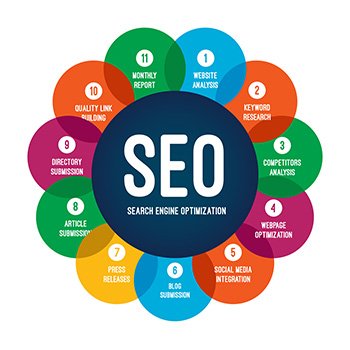
When people search for information, products, or services on search engines such as Google, they usually click on one of the top results. SEO helps businesses improve their chances of appearing in those positions.
SEO involves several areas, including keyword research, content optimization, technical improvements, website structure, link building, and performance analysis.
What Is an SEO Course?
An SEO course is a structured training program designed to teach students how search engine optimization works. A good course combines theoretical knowledge with practical exercises so learners can apply what they study to real websites.
Depending on the training program, an SEO course may cover beginner concepts as well as advanced optimization techniques.
Common topics include:
- SEO fundamentals
- Keyword research
- On-page SEO
- Technical SEO
- Off-page SEO
- Local SEO
- Content optimization
- Link building
- Google Search Console
- Website analytics
- SEO tools
- SEO audits
- SEO strategy
The exact curriculum can vary depending on the course provider and learning level.
Why Should You Learn SEO?
SEO is valuable because almost every business with an online presence needs search visibility. Companies want their websites to appear when potential customers search for relevant products and services.
Learning SEO can help you understand how search engines evaluate websites and how to create content that is useful for both users and search engines.
SEO knowledge can also be useful for people working in different roles, including digital marketing, content writing, website development, e-commerce, and business management.
What Will You Learn in an SEO Course?
1. Keyword Research
Keyword research is one of the foundations of SEO. It involves identifying the words and phrases people use when searching for information online.
Students learn how to find relevant keywords, understand search intent, evaluate competition, and select keywords that match a website’s goals.
For example, a training institute offering digital marketing education might target keywords related to SEO training, digital marketing courses, or SEO classes in its city.
2. On-Page SEO
On-page SEO focuses on optimizing individual web pages. Students learn how to improve elements such as:
- Page titles
- Meta descriptions
- Headings
- URLs
- Content
- Images
- Internal links
- Keyword placement
The objective is to make pages easier for search engines to understand while providing useful information to visitors.
3. Technical SEO
Technical SEO focuses on the technical aspects of a website that can affect search engine crawling, indexing, and user experience.
An SEO course may teach topics such as website speed, mobile responsiveness, XML sitemaps, robots.txt, redirects, canonical URLs, structured data, and website security.
Understanding technical SEO can help professionals identify problems that may prevent search engines from properly accessing or understanding a website.
4. Off-Page SEO
Off-page SEO refers to activities performed outside a website to improve its authority and online reputation.
Link building is a major part of off-page SEO. Students learn how backlinks work, how to evaluate link quality, and how to develop ethical strategies for earning relevant links.
A strong SEO course should emphasize quality and relevance rather than focusing only on the number of backlinks.
5. Local SEO
Local SEO is especially important for businesses that serve customers in specific geographic locations.
Students can learn how businesses can improve their visibility for location-based searches. Topics may include local business listings, reviews, location-specific content, and optimizing business information across online platforms.
Local SEO can help businesses attract customers who are searching for nearby products and services.
Practical Training and SEO Tools
One of the most important features of a good SEO course is practical learning. SEO is easier to understand when students work on real websites or realistic projects.
Training may include popular tools used for keyword research, website analysis, competitor research, technical audits, and performance monitoring.
Students may also learn how to use platforms such as Google Search Console and Google Analytics to understand website performance and search traffic.
Practical assignments can help learners develop confidence and create a portfolio that demonstrates their skills to potential employers or clients.
Career Opportunities After an SEO Course
Completing an SEO course can open the door to several career paths. Depending on experience and specialization, learners may pursue roles such as:
- SEO Executive
- SEO Specialist
- SEO Analyst
- Digital Marketing Executive
- Content Marketing Specialist
- SEO Consultant
- Local SEO Specialist
- E-commerce SEO Specialist
SEO professionals can work with digital marketing agencies, businesses, e-commerce companies, startups, or as freelancers.
With experience, professionals can also move into senior marketing and SEO management positions.

Who Should Take an SEO Course?
An SEO course can be useful for many types of learners.
Students can learn a practical digital skill and prepare for entry-level marketing jobs.
Business owners can understand how search visibility works and make better decisions about their online marketing.
Freelancers can add SEO services to their existing skill set and work with clients from different industries.
Marketing professionals can strengthen their knowledge and improve their ability to develop effective online campaigns.
Content writers can learn how to create search-friendly content without compromising quality or readability.
How to Choose the Right SEO Course
Not every SEO course offers the same level of training. Before choosing a program, consider the curriculum, practical assignments, trainer experience, learning format, and support provided to students.
A good course should teach current SEO practices rather than relying on outdated techniques. It should also provide opportunities to work on practical projects and understand how SEO strategies are measured.
Students should look for training that explains both the fundamentals and the reasoning behind different optimization techniques.
Conclusion
An SEO course can be a valuable investment for anyone interested in digital marketing and online business growth. By learning keyword research, on-page optimization, technical SEO, link building, local SEO, content strategy, and analytics, students can develop practical skills that are useful across many industries.
SEO is a constantly evolving field, so learning should not stop after completing a course. Search engines change, user behavior evolves, and new technologies influence how people discover information online.
With consistent learning, practical experience, and a focus on creating genuine value for users, SEO can become a powerful professional skill and an important part of a successful digital marketing career.